ONE-TRACK MOTORIZED SCREEN
Why One-Track

ONE-TRACK MOTORIZED SCREEN
Why One-Track
ONE-TRACK PROVEN DEPENDABILITY
Engineered For Excellence
One-Track introduced the patented quiet spring technology, the core of our One-Track system, nearly a decade ago.
We’ve crafted the perfect self-adjusting screen system that operates beautifully silently when deployed, ensures frustration-free operation, and can be used in almost any weather condition.
While others have experimented with alternative methods to achieve the advantages of our One-Track screens, none have achieved the unique combination of near-silence, ease of operation, affordability, high reliability, and exceptional dependability.
The real problem with most motorized screens
Most motorized screens fail for predictable reasons. Zippers snag. Cables stretch. Tracks shift. Motors strain.
What starts as a premium upgrade quickly turns into:
Screens that jam or tangle
Gaps that let bugs and wind in
Constant service calls and repairs
You shouldn't have to "babysit" your outdoor upgrade.
That's exactly why One-Track was built differently.
CONE-TRACK PROVEN PROTECT
Engineered For Excellence
For nearly two decades, One-Track has manufactured hurricane screens to meet the most demanding building code, the High Velocity Hurricane Zone of Miami-Dade. The One-Track is our newest version of the fixed track we have used with great success for high wind applications all over the globe.
The benefits of a fixed track are unmatched strength - this is important when designing a screen system for hurricanes. When you want the strongest system available, and a proven veteran of many hurricanes, the One-Track Screen is your best choice.
The real problem with most motorized screens
Most motorized screens fail for predictable reasons. Zippers snag. Cables stretch. Tracks shift. Motors strain.
What starts as a premium upgrade quickly turns into:
Screens that jam or tangle
Gaps that let bugs and wind in
Constant service calls and repairs
You shouldn't have to "babysit" your outdoor upgrade.
That's exactly why One-Track was built differently.
ONE-TRACK THE #1 MOTORIZED INSECT AND SHADE SCREEN
Contact A+ Certified One-Track Screen Dealer Today...
ONE-TRACK THE #1 MOTORIZED
HURRICANE SCREEN
Contact A+ Certified
One-Track Screen
Dealer Today...
ONE-TRACK MOTORIZED SCREENS
Engineering Features
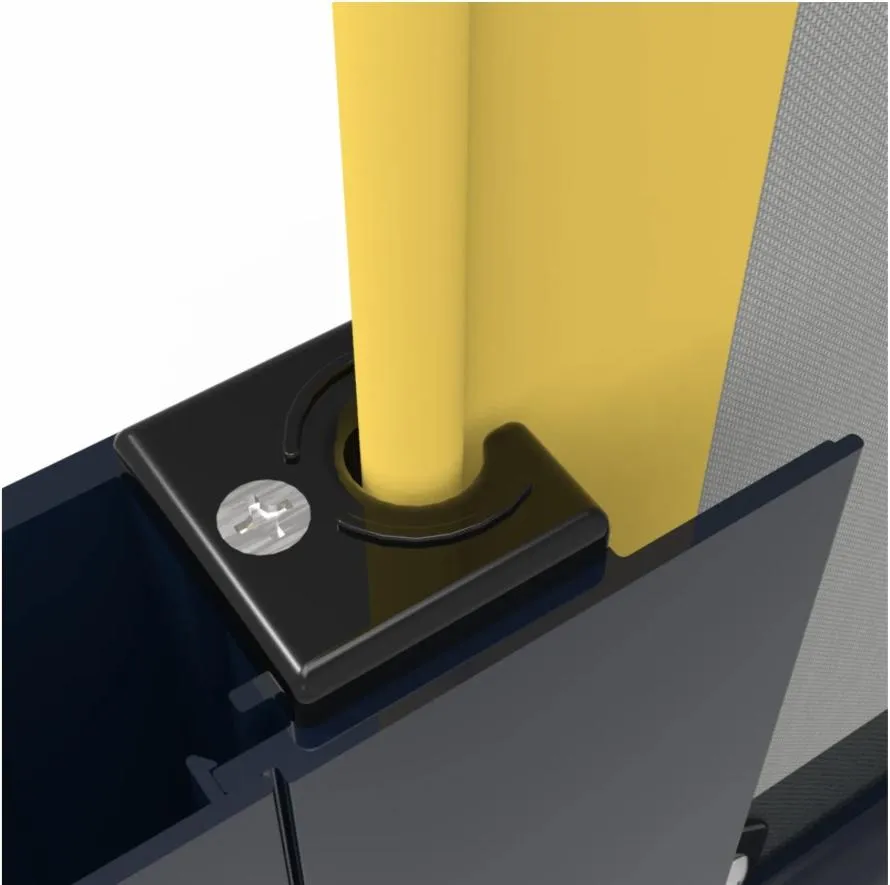
No blowouts. No rewraps. No frustration.
One-Track is the only retractable screen system on the market designed to stay locked in the track—even in high winds. Smart motor senses resistance and adjusts seamlessly, allowing self-correction when the screen encounters an obstacle: Fewer snags, fewer jams, and fewer costly service calls.
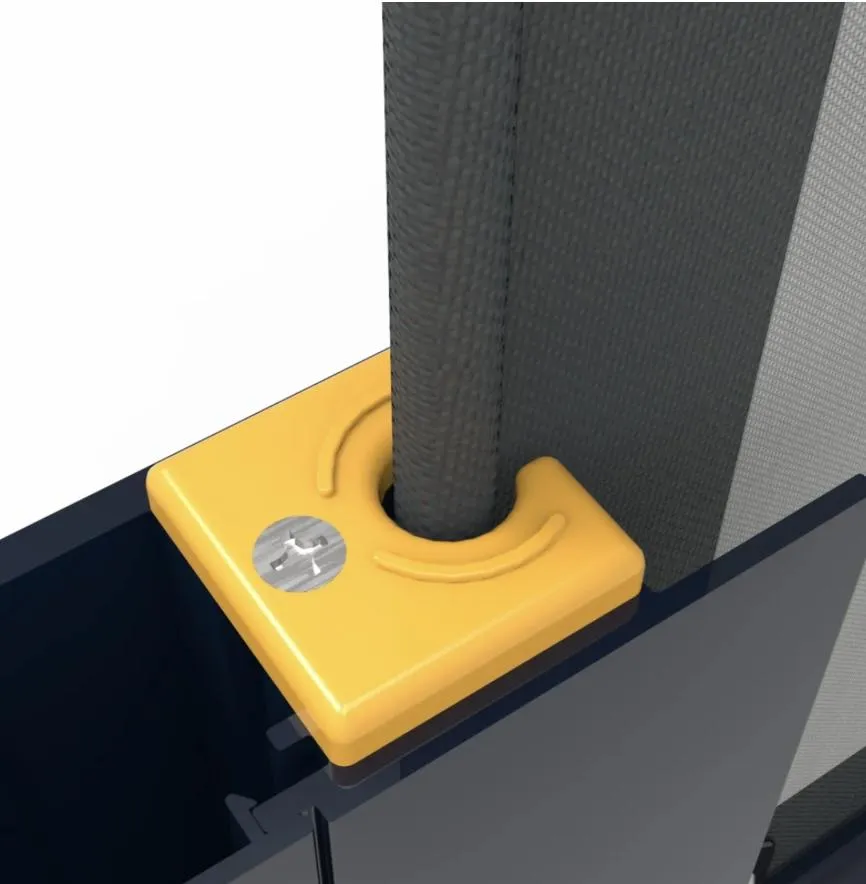
No Zipper. No Cable. Just Simple Deployment
One-Track pioneered Keder-edge technology in motorized screens, delivering unmatched durability and simplicity. Borrowed from sailboat rigging, this system eliminates zippers, cables, and exposed hardware—ensuring smooth, reliable operation every time.
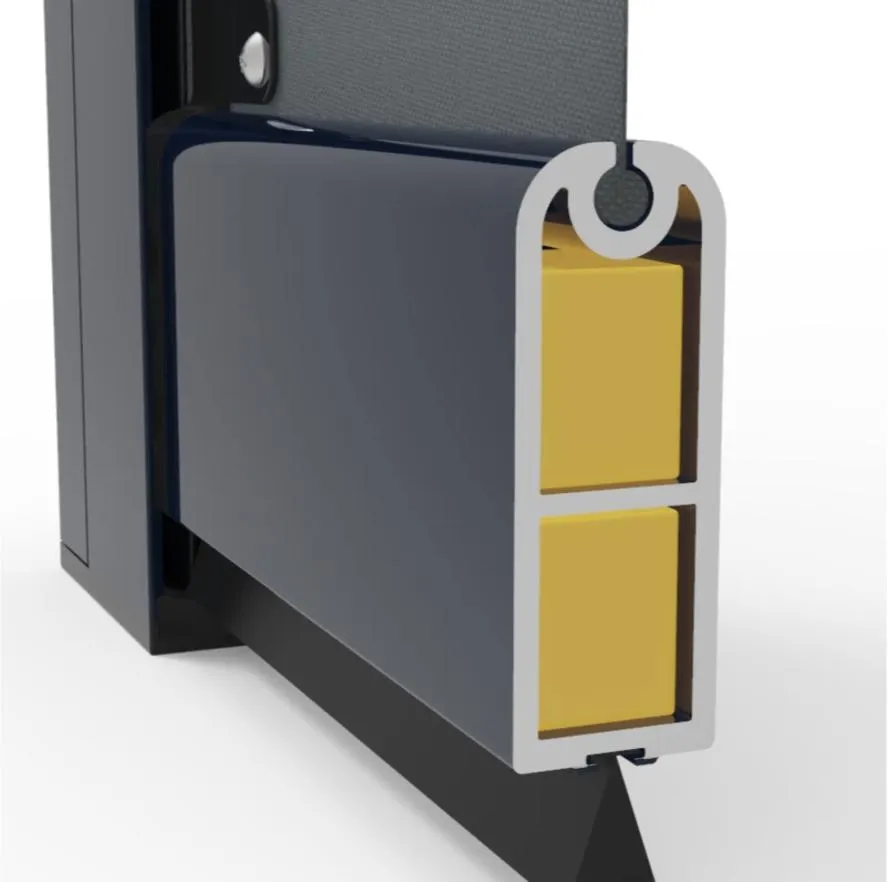
Heavy Duty
The One-Track weight bar is engineered for strength—and built to hold its ground. Pound for pound, it’s the heaviest and most robust weight bar in the industry. This ensures proper screen tension, flawless deployment, and maximum stability in high wind —limited flex, no failure.
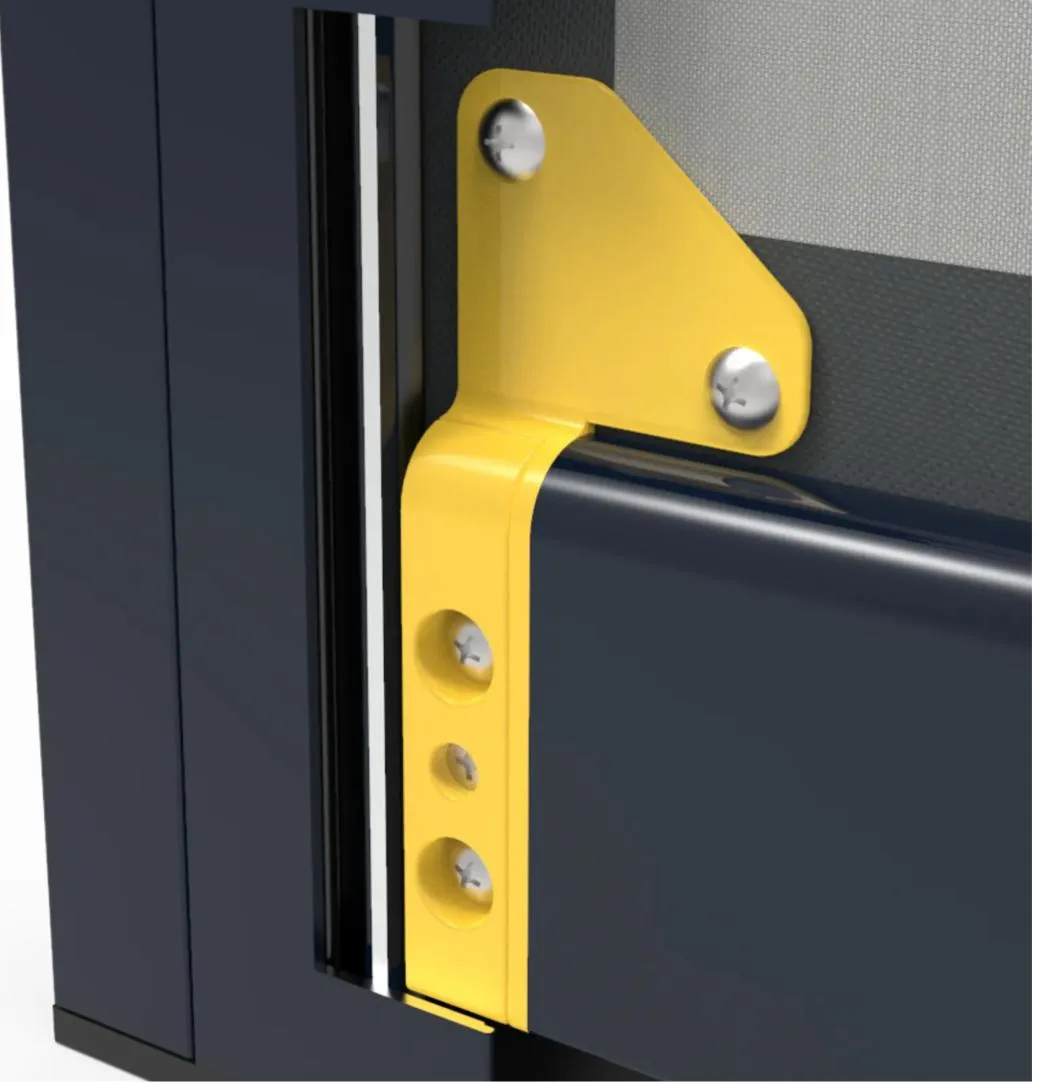
Reinforced Corners
One-Track’s heavy-duty weight bar isn’t just strong. It’s smart. Reinforced corners and integrated tie-ins create a unified structure that acts like a solid wall of protection when deployed. Made from high-strength nylon, this bar absorbs impacts while maintaining structural integrity.
ONE-TRACK HURRICANE SCREENS
Engineering Features
No blowouts. No rewraps. No frustration.
One-Track is the only retractable screen system on the market designed to stay locked in the track—even in high winds. Smart motor senses resistance and adjusts seamlessly, allowing self-correction when the screen encounters an obstacle: Fewer snags, fewer jams, and fewer costly service calls.
No Zipper. No Cable. Just Simple Deployment
One-Track pioneered Keder-edge technology in motorized screens, delivering unmatched durability and simplicity. Borrowed from sailboat rigging, this system eliminates zippers, cables, and exposed hardware—ensuring smooth, reliable operation every time.
Heavy Duty
The One-Track weight bar is engineered for strength—and built to hold its ground. Pound for pound, it’s the heaviest and most robust weight bar in the industry. This ensures proper screen tension, flawless deployment, and maximum stability in high wind zones. —limited flex, no failure.
Reinforced Corners
OneTrack’s heavy-duty weight bar isn’t just strong. It’s smart. Reinforced corners and integrated tie-ins create a unified structure that acts like a solid wall of protection when deployed. Made from high-strength nylon, this bar absorbs impacts while maintaining structural integrity.

HEADACHE-FREE
Exclusive self-tensioning system eliminates 99.9% of screen issues. No track adjustments, broken zippers,or dislodged screens.

LIFETIME WARRANTY
No other company can stand behind their products like One-Track can because no other company can match our quality.

BUILT TO LAST
We use marine-grade materials such as powder-coated aluminum, UV-protected nylons, stainless steel fasteners, and premium fabrics. Resists corrosion, rust, and screen failure.

COST-SAVING
Exterior shade screens reduce cooling bills and One-Track screens reduce insurance premiums in hurricane zones.

SMART CONTROLS
Control One-Track screens via remote and phone or integrate with popular home automation systems for advanced capabilities.

MAX CORROSION PROTECTION
Powder Coated Aluminum Protects your investment from exposer and corrosion.

HEAVY-DUTY DESIGN
Our screens are designed to withstand the extreme. High wind, rain, or shine, dust dirt, dander, it doesn't matter. One-Track covers it all.

CUSTOM-MADE SCREENS
Tailor-made screens with vast color,
fabric, and system options. Custom paint color and fabric matching are available.
ONE-TRACK THE #1 MOTORIZED
HURRICANE SCREEN
Contact A+ Certified
One-Track Screen
Dealer Today...
HEADACHE-FREE
Exclusive self-tensioning system eliminates 99.9% of screen issues. No track adjustments, broken zippers,or dislodged screens.
LIFETIME WARRANTY
No other company can stand behind their products like One-Track can because no other company can match our quality.
CUSTOM-MADE SCREENS
Tailor-made screens with vast color, fabric, and system options. Custom paint color and fabric matching are available.
BUILT TO LAST
We use marine-grade materials such as powder-coated aluminum, UV-protected nylons, stainless steel fasteners, and premium fabrics. Resists corrosion, rust, and screen failure.
COST-SAVING
Exterior shade screens reduce cooling bills and protect against skin and furniture Damage caused by excessive UV Rays.
SMART CONTROLS
Control One-Track screens via remote and phone or integrate with popular home automation systems for advanced capabilities.
MAX CORROSION PROTECTION
Powder Coated Aluminum Protects your investment from exposer and corrosion.
HEAVY-DUTY DESIGN
Our screens are designed to withstand Mother Nature's daily abuse. High wind, rain, or shine, dust dirt, dander, it doesn't matter. One-Track covers it all.
ONE-TRACK THE #1 MOTORIZED INSECT AND SHADE SCREEN
Contact A+ Certified One-Track Screen Dealer Today...
ONE-TRACK
Ready For Life's Storms
LOCK TIGHT - KEDER TECHNOLOGY
Good by Zipper Track System
When others relied on outdated zipper systems, One-Track pioneered a breakthrough. Our Lock Tight Keder technology transformed the industry by delivering what zippers couldn't: unmatched strength, flawless operation, and built-to-last reliability.
Years of proven performance speak for themselves. Lock Tight Keder provides superior wind resistance, effortless functionality, and the durability you need for long-term peace of mind.
Lock Tight Side Retention
Prevent Screen Hangups
Prevent Jams
Prevent Snaggs
Prevent Rewraps.
ONE-TRACK
Ready For Life's Storms
ONET-RACK HURRICANE SCREEN SYSTEM
A Certified, Tested System...
The One-Track screens meets or exceeds Miami-Dade and Florida Building Code requirements—the toughest hurricane codes on earth—for roll-down hurricane screens. Rated for the 185 MPH wind zone, and with real-world and certified testing. With spans of up to 24 feet, they exceed performance criteria for all local and International Building Codes.
ONE-TRACK THE #1 MOTORIZED MOTORIZED INSECT AND SHADE SCREEN
Contact A+ Certified One-Track Screen Dealer Today...
ONE-TRACK THE #1 MOTORIZED
HURRICANE SCREEN
Contact A+ Certified
One-Track Screen
Dealer Today...
THE ONE-TRACK DIFFERENCE
Eliminates All Services Call, Fix Track and Zippers Systems
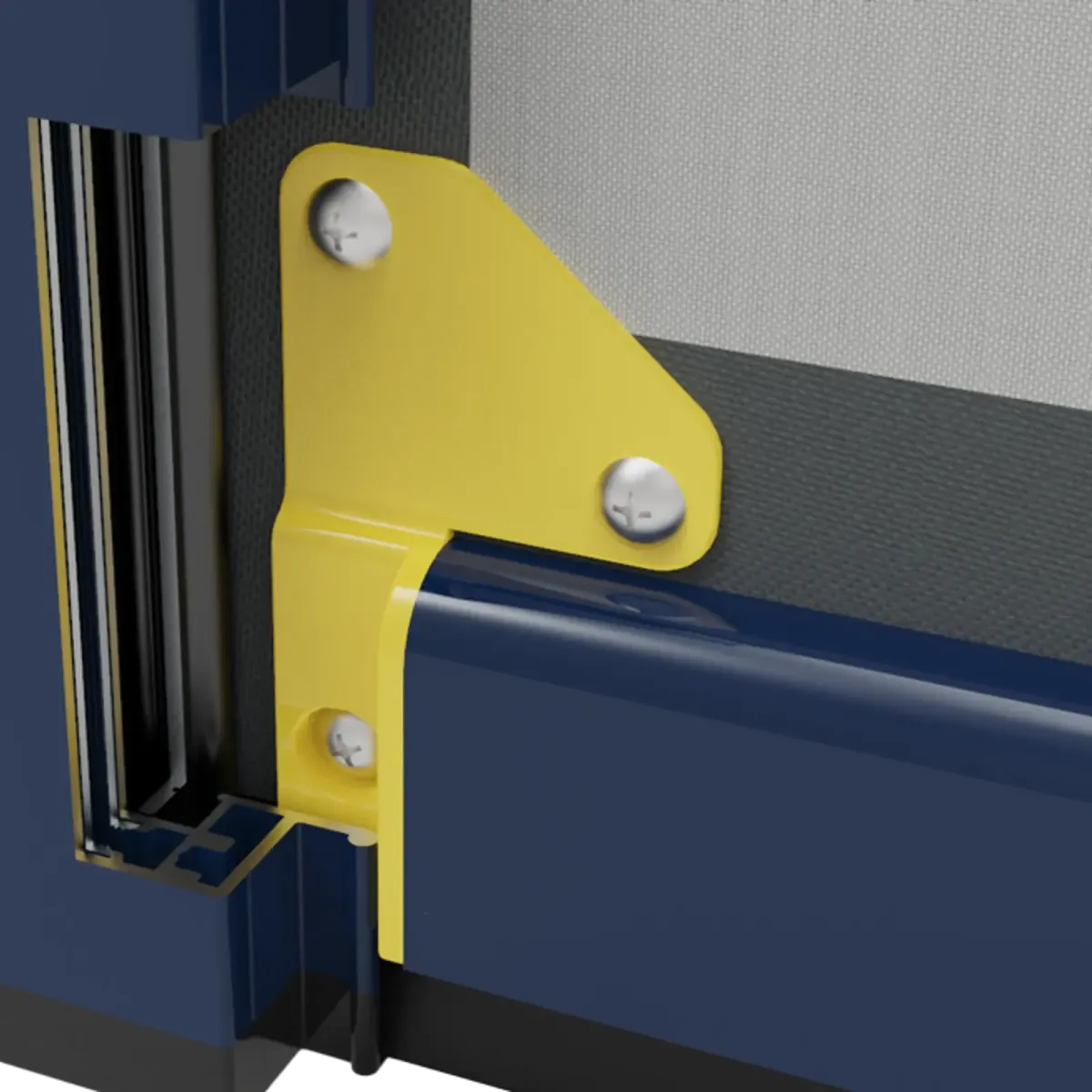
Recognizing that screen wear is most prominent at the corner where the weight bar and screen meet, One-Track engineers designed a robust and flexible guide made of toughened nylon. This innovative design reinforces the corner connection, extending the screen's lifespan,
.
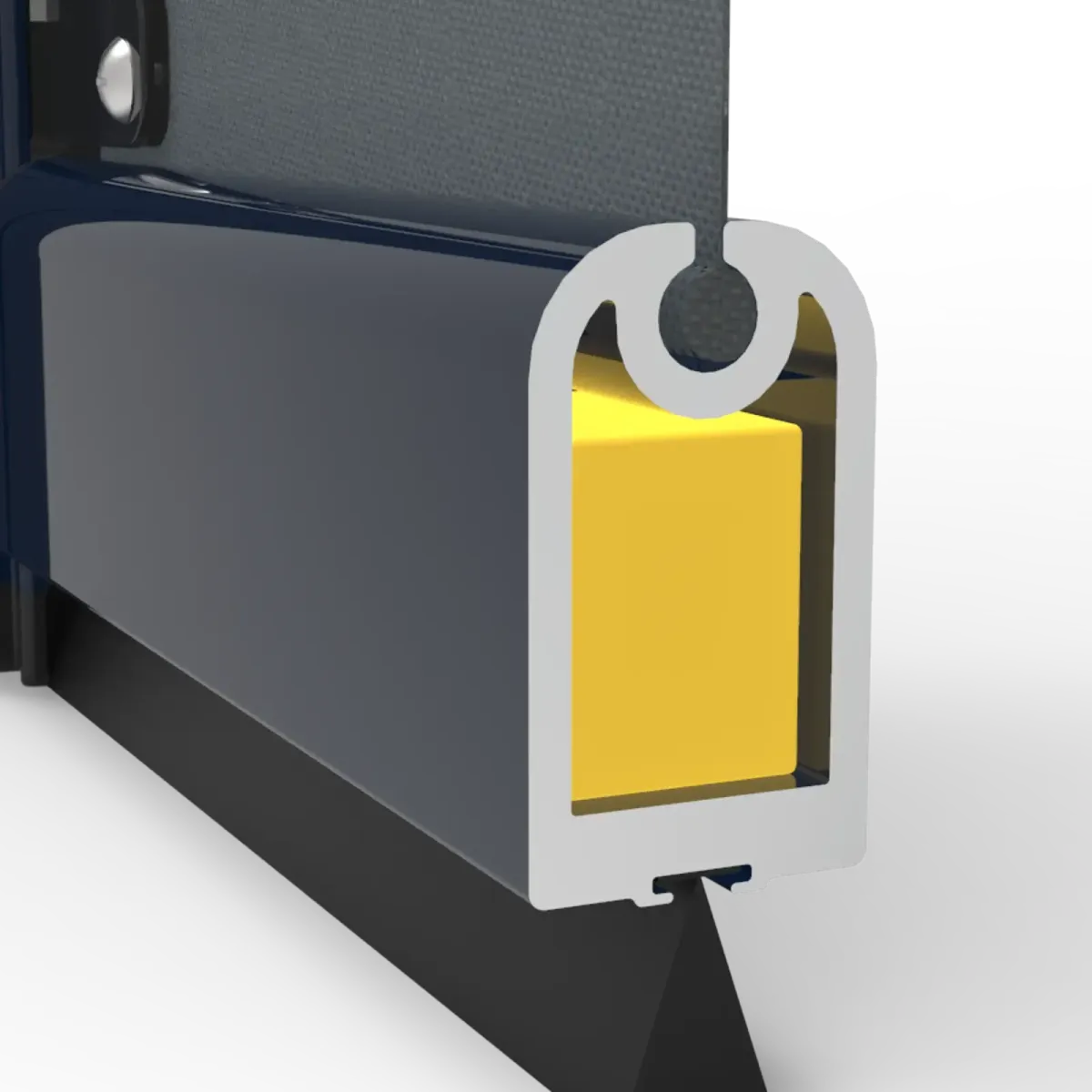
One-Track offers a well-engineered, low-profile standard weight bar suitable for installations in low-wind areas. When rolled up, it minimizes visibility in storage. For locations with higher wind exposure, a heavier-weight bar can be specified as needed.
.
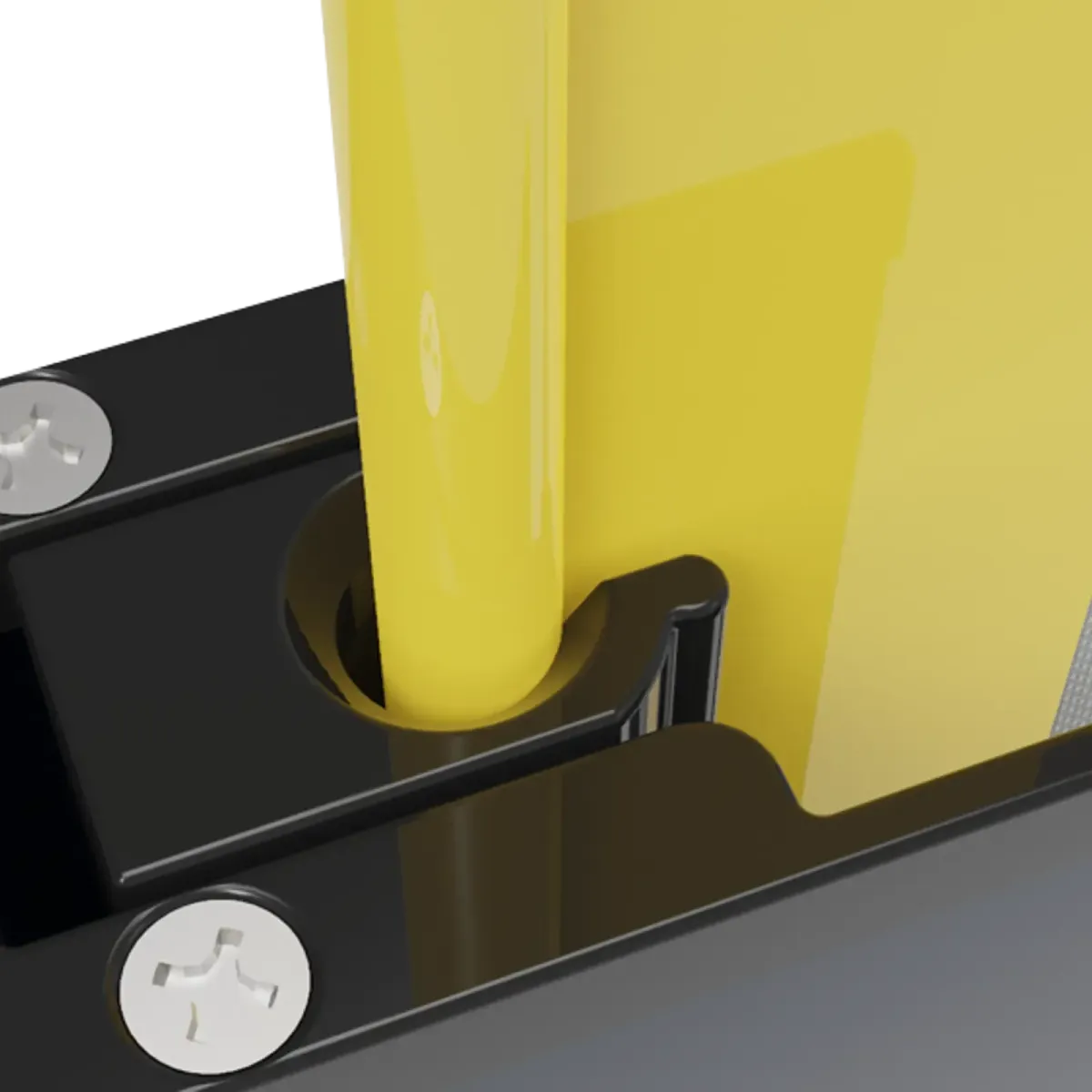
One-Track as the first to employ keder-edged screens, opted against zippers, known for potential issues. Keder's smooth, durable design avoids past failures.
.
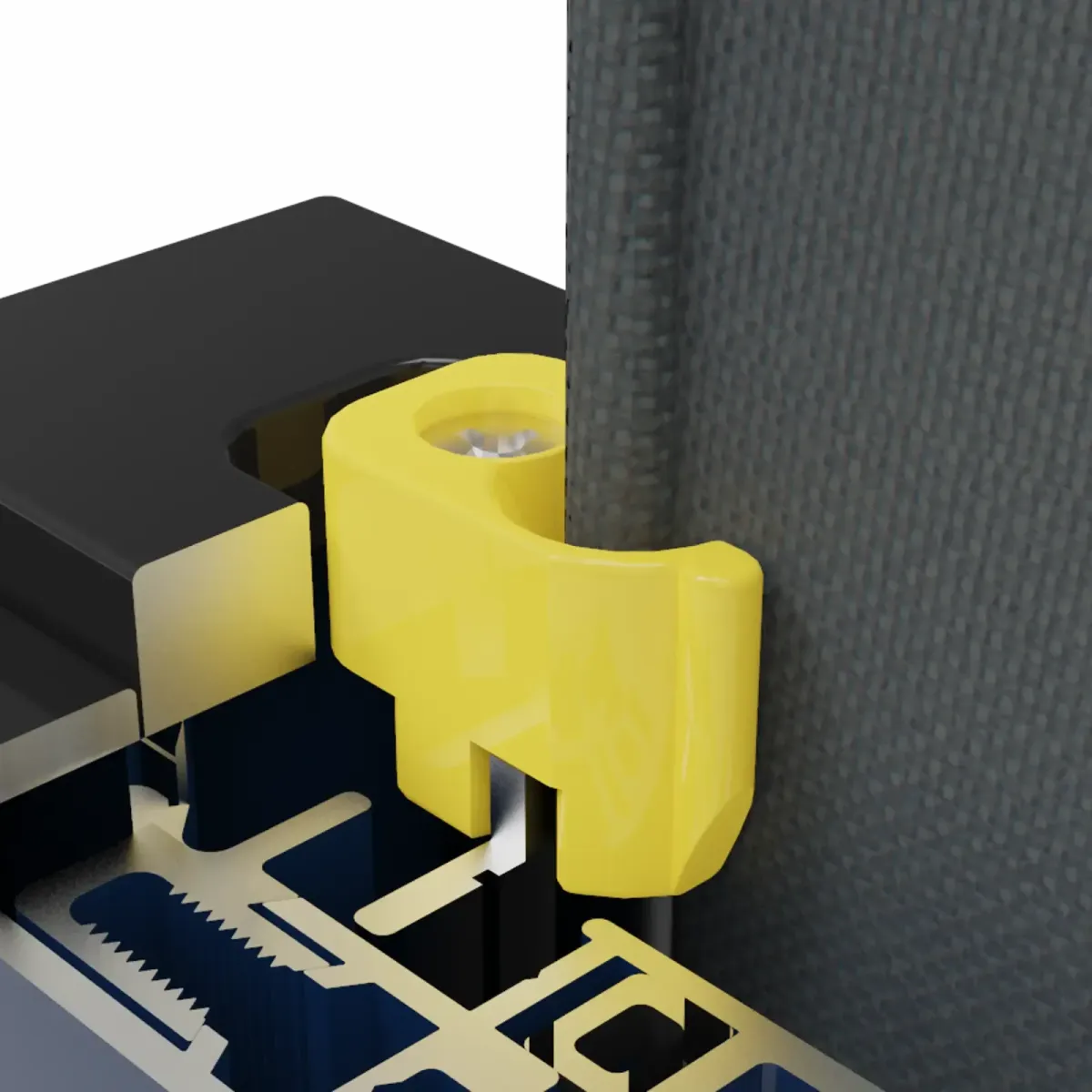
One-Track retractable screens are designed to never come out of their tracks. The screen pre-feeder facilitates a smooth transition from the reel to the side track. Smart motors instantly halt the downward motion of the screen, preventing it from dislodging from the tracks.
.
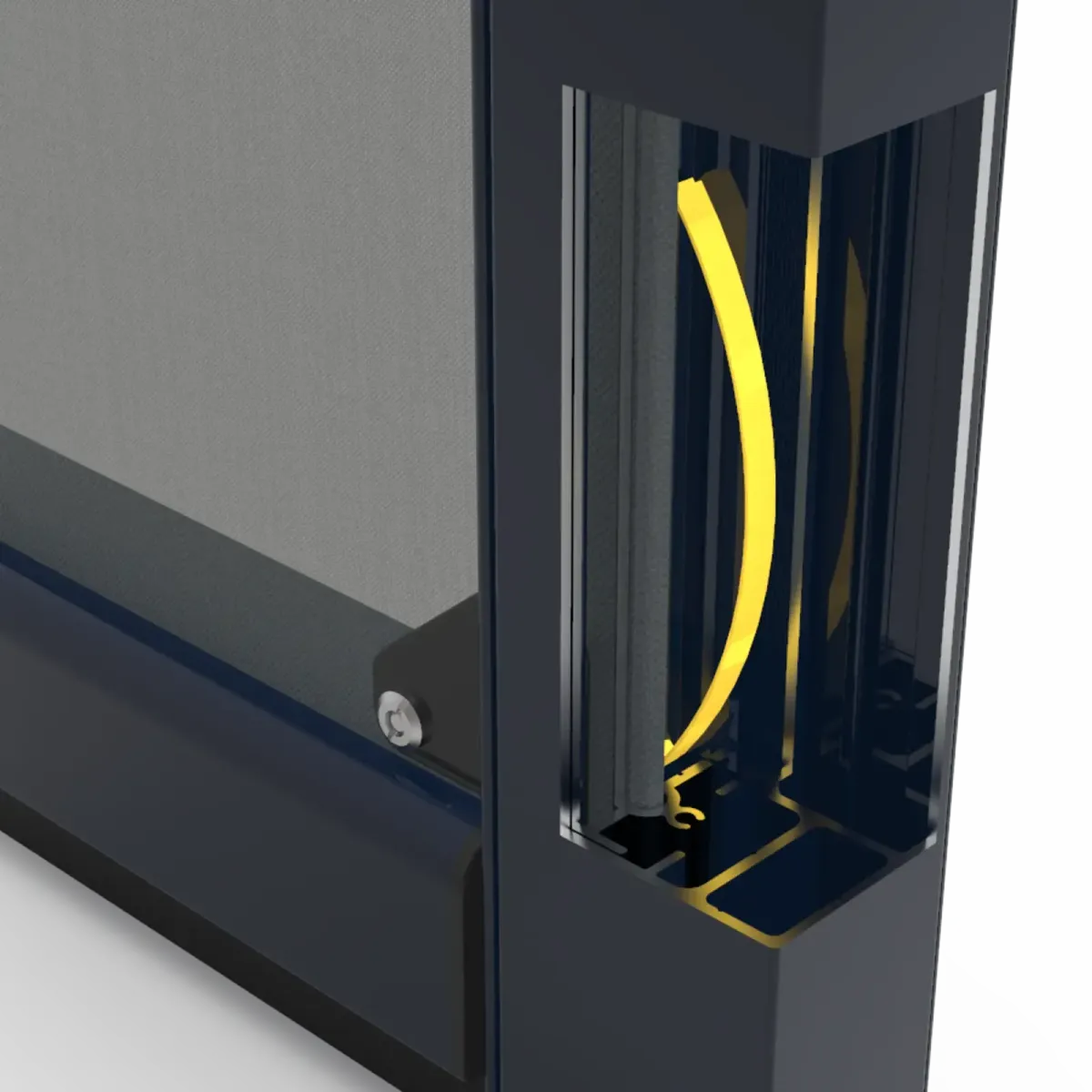
One-Track employs a unique spring-based tensioning system that ensures nearly silent operation of the screens. This technology prioritizes a quiet and comfortable outdoor experience. Think of it like shock absorbers in a car - It's the springs that give you a quiet, comfortable ride.
.
THE ONE-TRACK DIFFERENCE
One-Track Hurricane Screen
One-Track Screens, powered by our patented MagForce system, meet the toughest standards—including HVHZ certification in Miami-Dade and Broward. They last longer, resist more, and do more than any screen on the market—proven protection without compromise.
One-Track Screens —Delivers 365 days of perfect protection, rain or shine, on your patio and lanai. With the push of a button or a tap on the mobile app, your patio is storm-ready— furniture and openings fully protected in seconds.
One-Track Screens fabric blocks up to 95% of the sun’s damaging UV-rays while shielding against wind, rain, insects, dust, and debris. It also helps reduce heat and lower energy costs by limiting solar exposure—comfort and protection in one smart solution.
Like all One-Track products, our screens are highly customizable and built to order—made to fit your exact openings. No guesswork, no compromises—just precision-fit protection tailored to your space.
Pair our retractable screens with other One-Track screens for customized and independent solutions. Each screen operates independently, giving you the protection you want when you need it.
One-Track Screens offer built-in privacy without blocking your view. Like a two-way mirror, you can see out—but neighbors and passersby can not see in. It provides the perfect blend of openness and seclusion, day or night.
ONE-TRACK THE #1 MOTORIZED INSECT AND SHADE SCREENS
Contact A+ Certified One-Track Screen Dealer Today...
ONE-TRACK THE #1 MOTORIZED
HURRICANE SCREEN
Contact A+ Certified
One-Track Screen
Dealer Today...
THE ONE-TRACK DIFFERENCE
One-Track Screen
AMERICAN INGENUITY
Made in the USA.
Proudly Made in the USA—every One-Track screen is built with American strength, precision, and pride. From the smallest components to the final assembly, our materials are sourced and manufactured right here in the United States. No outsourcing. No compromises. Just hardworking Americans protecting American homes with the toughest screen system on the market.
THE ONE-TRACK DIFFERENCE
One-Track Hurricane Screen
AMERICAN INGENUITY
Made in the USA.
Proudly Made in the USA—every One-Track screen is built with American strength, precision, and pride. From the smallest components to the final assembly, our materials are sourced and manufactured right here in the United States. No outsourcing. No compromises. Just hardworking Americans protecting American homes with the toughest screen system on the market.
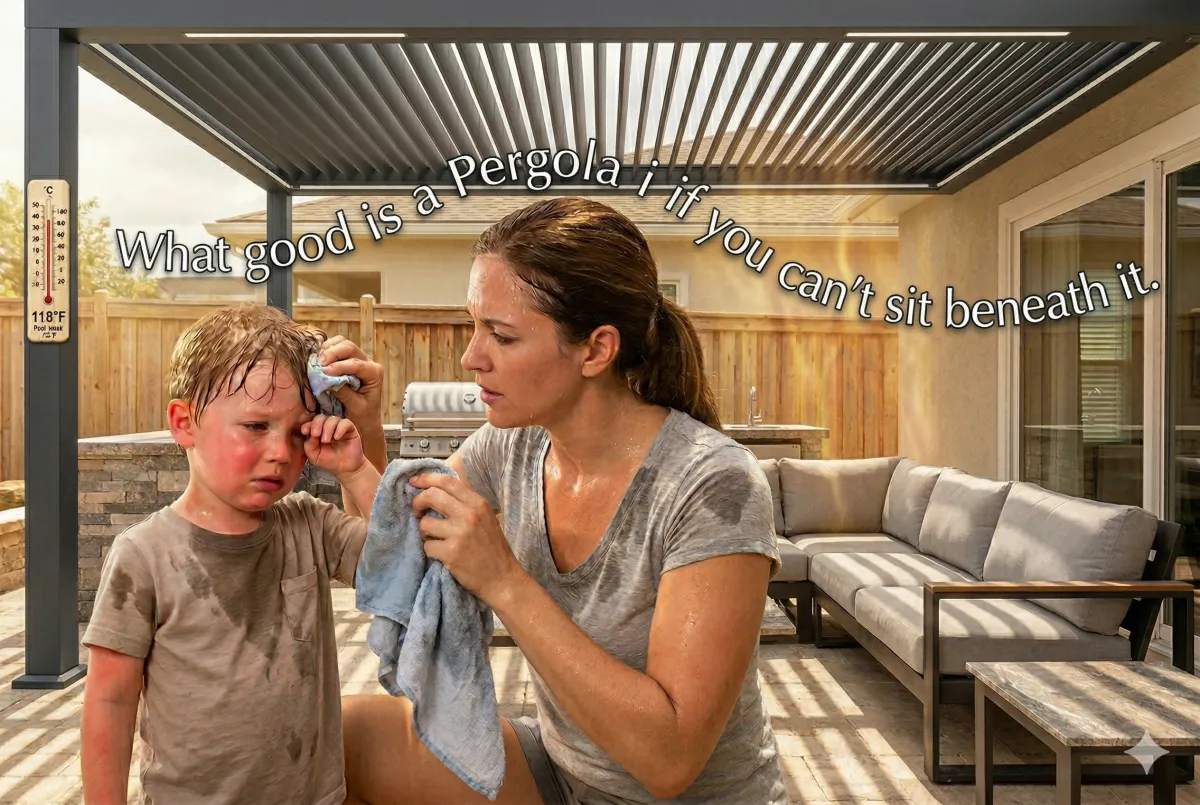
How to Make Your Pergola Comfortable on the Hottest Days
The most effective way to keep a pergola cool in Florida is a solar screen that blocks heat before it enters the space — not shade structures, umbrellas, or fans that manage heat after it has already arrived. The Fenetex OneTrack motorized retractable screen blocks 91 percent of UV radiation and significantly reduces solar heat gain under the pergola, bringing afternoon temperatures from hostile to comfortable. It retracts completely when not needed. When deployed, it transforms a south- or west-facing pergola that is unusable from noon to 6 p.m. into a space a family can actually occupy during the hours they most want to be outside.
This article explains why heat is the second-most disruptive threat to Northeast Florida pergola owners, how solar radiation works at a physical level, why common shade solutions fall short, and exactly what the OneTrack solar screen does that no other product on the market can match. The numbers are specific. The science is real. And the answer — for homeowners in St. Augustine, Nocatee, Ponte Vedra Beach, and the surrounding St. Johns County communities — is clearer than most people expect.
The Heat Reality in Northeast Florida: What the Numbers Actually Say
Florida heat is not a subjective experience. It is a measurable, documentable force that operates with consistency and indifference to plans, schedules, and outdoor furniture arrangements. The numbers define the problem precisely.
According to NOAA climate records for St. Johns County, the Northeast Florida region averages more than 100 days per year with temperatures exceeding 90 degrees Fahrenheit. From June through September, the daily high temperature in St. Augustine and surrounding communities averages between 90 and 94 degrees. Heat index values — which account for the combination of temperature and humidity — regularly exceed 105 degrees during afternoon hours, and periodically climb above 110.
Those numbers describe what it feels like in the shade. In direct sunlight, surface temperatures differ markedly. A concrete or tile patio surface under direct afternoon sun in July can reach 150 degrees Fahrenheit or higher. Outdoor furniture — metal frames, stone tabletops — absorbs and radiates heat, making sitting near it genuinely uncomfortable. Cushions that have been in direct sunlight are too hot to touch. A pergola without solar protection is not merely warm in the afternoon. It is physically hostile.
The timing of this hostility is its most painful dimension. The Florida Climate Center at Florida State University documents Northeast Florida's peak solar intensity window as roughly 10 a.m. to 5 p.m., with maximum heat load between noon and 4 p.m. These are the precise hours that define a Florida weekend. Saturday afternoon, Sunday morning stretching into afternoon, the window between work and dinner on a summer weekday. A south- or west-facing pergola loses those hours entirely — not to weather, not to storms, but to a sun that makes the space unusable at the exact time its owner most wants to use it.
The ultraviolet component adds a health dimension that compounds the comfort problem. The American Cancer Society reports that Florida leads all 50 states in melanoma diagnoses. UV-A and UV-B radiation — the bands responsible for both sunburn and long-term cellular damage — are present and active even on overcast days, penetrating cloud cover and reaching exposed skin at levels that accumulate over time. A pergola that provides no UV filtering is not a sun shelter. It is an outdoor space where UV exposure continues unmoderated throughout the hours of occupancy.
The Solar Cascade: One Root Cause, Multiple Problems
Most homeowners frustrated with their pergola's heat are aware of the immediate problem — it is too hot to sit outside in the afternoon. What most have not traced is how far that single root cause extends. Solar radiation hitting an unprotected pergola and the adjacent structure does not pose a single problem. It creates five simultaneously.
The outdoor comfort problem. Direct sun on the pergola surface and its occupants creates the immediate heat and UV exposure described above. This is the visible, felt dimension of the solar cascade — the one that drives homeowners inside at noon and keeps them there until evening.
The indoor overheating problem. A pergola is typically adjacent to sliding glass doors, French doors, or large windows that connect the outdoor space to the home's interior. Sun that clears the pergola structure and strikes those glass surfaces transfers solar heat gain directly into the interior rooms. A west-facing pergola in Nocatee or Ponte Vedra Beach receives direct afternoon sun on those glass surfaces for four to six hours on a summer day. The rooms behind them — the kitchen, the living room, the family room — continuously absorb that heat load. The result is warm interior rooms despite the air conditioning running at full capacity.
The U.S. Department of Energy notes that solar heat gain through windows is one of the primary contributors to residential cooling load in hot climates — accounting for up to 76 percent of the heat entering a home on a sunny day through south- and west-facing glass. In practical terms, a homeowner whose pergola faces west is not merely losing outdoor afternoon hours. They are also paying a premium on their electricity bill to cool rooms that are being heated by the same sun.
The furnishing damage problem. UV radiation does not stop at the pergola's edge. It penetrates into the space, striking outdoor furniture, cushions, and any interior furnishings visible through adjacent glass. Outdoor cushions in direct sun fade, crack, and deteriorate in two to three Florida summers. Hardwood floors near large glass doors develop visible discoloration between sun-exposed and shaded areas. Upholstery fades unevenly. The UV damage is gradual, so it is rarely linked to the solar problem until it is already significant and irreversible.
The AC cost problem. The indoor overheating caused by solar heat gain through pergola-adjacent glass increases air conditioning runtime. The U.S. Energy Information Administration documents that residential cooling accounts for approximately 17 percent of total household energy use nationally — a figure that rises significantly in hot, humid climates like Northeast Florida's. Homeowners who have noted that their summer electricity bills are dramatically higher than their spring and fall bills are, in many cases, looking at the financial consequences of uncontrolled solar heat gain.
The quality-of-life erosion problem. Homeowners who live with significant solar exposure to their outdoor space adapt gradually. They stop opening the blinds on the sun-facing side of the house. They close the sliding glass doors earlier in the day. They avoid the pergola during peak hours and develop habits around the sun's schedule rather than their own. This adaptation is so gradual that most homeowners do not recognize it as a loss until someone asks them to describe a typical summer afternoon. The answer, when examined, reveals that the home — designed to connect indoor and outdoor living — has been divided by a sun that owns the outdoor space from noon to evening.
Why Common Heat Solutions Fall Short
The instinct when confronting a heat problem is to add shade. Umbrellas, shade sails, pergola roof panels, and ceiling fans all address the symptom from the same angle: reducing direct sun exposure for occupants. Each has genuine limitations that Northeast Florida homeowners discover through experience.
Patio Umbrellas
A market umbrella, or cantilever umbrella, reduces direct sun on the area beneath it and nothing else. It does not address solar heat gain through adjacent glass. It does not filter UV radiation from the angled sun reaching the pergola opening. In wind — a consistent feature of Northeast Florida afternoons — it either closes automatically or must be manually lowered to prevent tipping. The effective shade area of a 10-foot umbrella is approximately 50 square feet. A standard pergola opening covers two to four times that area. And the umbrella provides zero protection once deployed against insects, the afternoon rain, or the hurricane-season threats addressed in the other articles in this series.
Shade Sails and Fixed Panels
A fixed shade sail or solid pergola roof panel blocks vertical solar radiation effectively. It does not address horizontal or angled solar radiation entering the pergola from the sides during the early morning or late afternoon. More importantly, a fixed panel commits the homeowner to permanent shade — eliminating the morning sun in winter, the comfortable spring and fall afternoons when full sun is welcome, and the flexibility to adjust the space to changing conditions. In Northeast Florida's seasonal climate, permanent shade is a trade-off that many homeowners regret within the first year of installation.
Ceiling Fans
A ceiling fan under a pergola improves evaporative cooling — the rate at which perspiration removes heat from the skin. This is a real comfort benefit in moderate conditions. It is not solar protection. A ceiling fan does not reduce the temperature of the air under the pergola, does not block UV radiation, and does not address the solar heat gain problem for adjacent interior rooms. In peak summer conditions, when air temperatures under the pergola exceed 100 degrees, and heat index values approach 110, a fan moves hot air across hot skin at a slightly faster rate. It does not make the space comfortable.
The pattern is consistent across all of these solutions. They manage the heat experience for the people already in the space. None of them addresses the source — solar radiation entering the pergola opening — before it creates the heat problem in the first place.
The Fenetex OneTrack Solar Screen: Blocking Heat at the Source
The principle behind the OneTrack solar screen differs from that of every shade solution described above. It does not manage heat. It blocks it. The distinction is not semantic — it is the difference between treating the symptom and eliminating the cause.
The Fenetex OneTrack screen's OmegaTex fabric is rated to block 91 percent of UV radiation and significantly reduce solar heat gain for the space behind it. When deployed across a pergola opening, it intercepts solar radiation before it enters the space — before it heats the surfaces, furniture, occupants, and adjacent glass. The heat that would otherwise accumulate under the pergola and radiate into the interior rooms is largely absorbed and reflected by the fabric before it crosses the plane of the opening.
How 91 Percent UV Blocking Changes the Space
Ninety-one percent UV reduction is not a marketing figure. It is a measured performance specification for the OmegaTex fabric, consistent with the Skin Cancer Foundation's standards for UV-protective fabrics. A fabric blocking 91 percent of UV radiation provides a UV Protection Factor (UPF) of approximately 50 — the same rating used for sun-protective clothing. Occupants under a deployed OneTrack screen receive UV exposure comparable to wearing a long-sleeved shirt with SPF 50 sunscreen while sitting in an open outdoor environment. For families with young children, for homeowners with heightened skin cancer risk, and for anyone who wants to use their outdoor space without the ritual of sunscreen application and reapplication, this is a meaningful health benefit.
Outward Visibility: What You Give Up
The most common concern homeowners express when learning about solar screens is the view. A screen that blocks 91 percent of UV radiation and reduces solar heat gain substantially must, by necessity, filter some of the visible light passing through the fabric. This is true, and it is worth addressing honestly.
The OmegaTex fabric functions as a one-way mirror during daylight hours. From inside the screen, outward visibility is clear — the view through the deployed screen to the pool, the landscape, the waterfront, or the neighborhood beyond is not significantly impaired. From outside the screen, inward visibility is reduced — the screen provides privacy for the pergola's occupants while maintaining their view out. At night, when interior lighting is brighter than exterior, this effect reverses. The fabric is available in six colors, each designed to maximize visibility while meeting the solar performance specifications.
The Deployment Advantage
The key difference between the OneTrack solar screen and every fixed shade solution is the word retractable. When the afternoon sun makes the pergola hostile, the screen deploys — at the press of a button, a tap on a smartphone, or a voice command through Alexa or Google Home integration. When the sun moves, when the temperature drops, when the evening brings comfortable outdoor conditions, the screen retracts completely into its flush-mounted housing. The pergola is fully open. The view is unobstructed. The morning sun comes in unfiltered on a January weekend when the warmth is welcome.
This on-demand flexibility resolves the fundamental objection to permanent shade solutions. The homeowner is not choosing between a shaded pergola and an open one. They are choosing, moment by moment, which environment they want — and the transition takes seconds.
The Indoor Dimension: What the Screen Does Beyond the Pergola
Here is the part of the solar screen conversation that shifts the financial calculation entirely for many Northeast Florida homeowners.
A OneTrack screen deployed across a west-facing pergola opening not only cools the pergola. It reduces solar heat gain for every glass surface behind the pergola opening — the sliding glass doors, the adjacent windows, the sidelights. According to research published by the U.S. Department of Energy's Lawrence Berkeley National Laboratory, exterior shading that blocks solar radiation before it reaches glass is significantly more effective at reducing indoor heat gain than interior shades, blinds, or low-e glass coatings — because exterior shading intercepts the energy before it enters the thermal envelope of the home. Interior solutions manage heat that has already transferred through the glass. Exterior solutions prevent the transfer.
For a homeowner running air conditioning at elevated capacity through a Northeast Florida summer, blocking solar heat gain through west- and south-facing glass can meaningfully reduce energy consumption. The screen that makes the pergola comfortable also reduces the electricity bill for the rooms behind it. That is not a secondary benefit. For homeowners in higher-end Nocatee, Ponte Vedra Beach, and St. Augustine properties with large glass door systems, it can be a primary financial justification that stands entirely independent of the outdoor comfort improvement.
The UV protection for interior furnishings completes the picture. Hardwood floors adjacent to pergola-facing glass, outdoor furniture within the screened space, and interior upholstery visible through the glass doors — all receive continuous UV protection while the screen is deployed. The furniture that was fading is no longer fading. The floor, which was developing sun-bleached patterns, stabilizes. These are not dramatic, immediate changes. But over two, three, and five years, they represent a meaningful preservation of assets that cost real money to replace.
The Afternoon Window: What Heat Protection Is Actually Worth
Here is the calculation that most Northeast Florida pergola owners have never done.
A west- or south-facing pergola in St. Johns County is uncomfortable for outdoor use from roughly 11 a.m. to 5 p.m. during June, July, August, and September. That is six hours per day, seven days a week, for four months. Four months is approximately 120 days. Six hours per day over 120 days is 720 hours of outdoor living per year that the heat has taken from you.
Seven hundred and twenty hours. That is 30 full days — an entire month of afternoons. Every Saturday and Sunday from Memorial Day through Labor Day, from late morning through early evening, the prime outdoor hours of the prime outdoor season, are made inaccessible by a problem that has a direct and permanent solution.
The compounding effect of the insect problem described in Article 2 is worth noting here. A homeowner whose pergola is unusable from noon to 5 p.m. due to heat, and unusable from 6 p.m. to dark due to insects, has a pergola that is functionally comfortable for approximately one to two hours per day during the warm months — the narrow window between when the heat breaks and when the mosquitoes arrive. The OneTrack screen, which addresses both threats simultaneously, effectively reclaims the entire day.
Year-Round Value: The Screen That Earns Every Month
The final argument for a solar screen on a Northeast Florida pergola is the one that distinguishes a purchase from an investment. A pergola shade umbrella provides shade only when the sun is directly overhead. A OneTrack screen provides solar heat blocking, UV protection, insect exclusion, rain buffering, and privacy on demand — and it does so across every month of the year that any of those functions is needed, which in Northeast Florida is every month of the year.
In April and May, when the heat is building but the afternoons are still manageable, the screen provides UV protection and insect exclusion during the shoulder season, extending comfortable outdoor hours into the early evening. In June through September, it blocks heat in the afternoon and insects at dusk — reclaiming both halves of the outdoor day. In October and November, as the heat relents but insects remain active, it continues providing insect protection. In December through March, when Northeast Florida's mild winters make the pergola genuinely pleasant without modification, the screen retracts and stays out of the way.
And when hurricane season — which runs from June 1 through November 30 — brings a named storm toward the First Coast, the Fenetex MaxForce Hurricane Track provides certified hurricane protection for the pergola opening. The MaxForce is a separate, purpose-built system carrying Florida Product Approval FL 8637 — discussed in detail in Article 5 of this series. Many Titan installations include both the OneTrack for daily use and the MaxForce for storm season, providing a complete protection plan from January through December with one contractor, one design, and one installation.
Titan Shutters and Screens | Free Pergola Protection Assessment
We walk through your property, assess every opening for solar exposure, insect activity, and storm risk, and design a complete protection plan.
No obligation. No pressure. One contractor. One plan.
Call or text: (904) 484-7580|TitanShuttersandScreens.com
Serving St. Augustine · Nocatee · Ponte Vedra Beach · Palm Coast · Jacksonville · Northeast Florida

Frequently Asked Questions
How much does a solar screen reduce heat in a pergola?
The Fenetex OneTrack screen's OmegaTex fabric blocks 91 percent of UV radiation and significantly reduces solar heat gain for the space behind the deployed screen. The degree of temperature reduction depends on the pergola's orientation, the time of day, and ambient conditions, but homeowners in Northeast Florida typically report that a previously unusable afternoon space becomes comfortably usable with the screen deployed. The U.S. Department of Energy notes that exterior shading solutions are among the most effective methods for reducing cooling loads in residential buildings.
Can you see through a solar screen on a pergola?
Yes. The Fenetex OmegaTex fabric functions as a one-way mirror during daylight hours — clear outward visibility from inside the screen, reduced inward visibility from outside. The fabric is available in six colors, each engineered to maximize view clarity while delivering full UV and solar-heat-blocking performance. At night, when interior lighting is brighter than the exterior environment, the visibility differential reverses.
Will a solar screen on my pergola lower my energy bills?
A solar screen deployed across a west- or south-facing pergola opening that also covers adjacent glass doors and windows reduces solar heat gain for the interior rooms behind those openings. Research from the U.S. Department of Energy and Lawrence Berkeley National Laboratory both document that exterior shading solutions reduce cooling load more effectively than interior shades or low-e glass coatings because they intercept solar energy before it enters the home's thermal envelope. The specific energy savings depend on the home's orientation, the size of the screened opening, and existing insulation.
Does a solar screen also protect against insects?
Yes. The Fenetex OneTrack screen addresses both solar heat gain and insect intrusion simultaneously. The OmegaTex fabric is engineered at a mesh density that blocks mosquitoes, no-see-ums, and biting flies, while maintaining the airflow and visibility characteristics of a solar shade fabric. One deployed screen eliminates both threats at once — which is why most Northeast Florida homeowners who install the OneTrack describe it as helping them recover both their afternoon and evening hours.
How long does installation take for a solar screen pergola system in Northeast Florida?
Fenetex OneTrack systems are custom-fabricated to the exact dimensions of the pergola opening. Lead times are approximately 60 to 90 days from deposit to completed installation. Permits are required in many Northeast Florida municipalities for permanent screen installations, and add scheduling time. Homeowners who begin the process in early spring typically have their systems installed and operational before the summer heat season peaks in June.
Continue Reading: Your Pergola, Every Season
Article 1: The Four Threats Every Northeast Florida Pergola Faces — And How to Beat All of Them
Article 2: No More Bug Spray — The Complete Guide to Insect Protection for Your Northeast Florida Pergola
Article 4: Staying Outside in the Rain — How Motorized Screens Keep Your Pergola Dry Through Florida's Afternoon Showers
Article 5: Hurricane-Proofing Your Pergola — What Every Northeast Florida Homeowner Needs to Know
Sources and References
NOAA Climate at a Glance — Northeast Florida
Florida Climate Center, Florida State University
American Cancer Society — Melanoma Statistics
Skin Cancer Foundation — Sun-Protective Fabrics and UPF Ratings
U.S. Department of Energy — Window Coverings and Solar Heat Gain
Lawrence Berkeley National Laboratory — Exterior Shading Research
U.S. Energy Information Administration — Residential Energy Consumption

How to Make Your Pergola Comfortable on the Hottest Days
The most effective way to keep a pergola cool in Florida is a solar screen that blocks heat before it enters the space — not shade structures, umbrellas, or fans that manage heat after it has already arrived. The Fenetex OneTrack motorized retractable screen blocks 91 percent of UV radiation and significantly reduces solar heat gain under the pergola, bringing afternoon temperatures from hostile to comfortable. It retracts completely when not needed. When deployed, it transforms a south- or west-facing pergola that is unusable from noon to 6 p.m. into a space a family can actually occupy during the hours they most want to be outside.
This article explains why heat is the second-most disruptive threat to Northeast Florida pergola owners, how solar radiation works at a physical level, why common shade solutions fall short, and exactly what the OneTrack solar screen does that no other product on the market can match. The numbers are specific. The science is real. And the answer — for homeowners in St. Augustine, Nocatee, Ponte Vedra Beach, and the surrounding St. Johns County communities — is clearer than most people expect.
The Heat Reality in Northeast Florida: What the Numbers Actually Say
Florida heat is not a subjective experience. It is a measurable, documentable force that operates with consistency and indifference to plans, schedules, and outdoor furniture arrangements. The numbers define the problem precisely.
According to NOAA climate records for St. Johns County, the Northeast Florida region averages more than 100 days per year with temperatures exceeding 90 degrees Fahrenheit. From June through September, the daily high temperature in St. Augustine and surrounding communities averages between 90 and 94 degrees. Heat index values — which account for the combination of temperature and humidity — regularly exceed 105 degrees during afternoon hours, and periodically climb above 110.
Those numbers describe what it feels like in the shade. In direct sunlight, surface temperatures differ markedly. A concrete or tile patio surface under direct afternoon sun in July can reach 150 degrees Fahrenheit or higher. Outdoor furniture — metal frames, stone tabletops — absorbs and radiates heat, making sitting near it genuinely uncomfortable. Cushions that have been in direct sunlight are too hot to touch. A pergola without solar protection is not merely warm in the afternoon. It is physically hostile.
The timing of this hostility is its most painful dimension. The Florida Climate Center at Florida State University documents Northeast Florida's peak solar intensity window as roughly 10 a.m. to 5 p.m., with maximum heat load between noon and 4 p.m. These are the precise hours that define a Florida weekend. Saturday afternoon, Sunday morning stretching into afternoon, the window between work and dinner on a summer weekday. A south- or west-facing pergola loses those hours entirely — not to weather, not to storms, but to a sun that makes the space unusable at the exact time its owner most wants to use it.
The ultraviolet component adds a health dimension that compounds the comfort problem. The American Cancer Society reports that Florida leads all 50 states in melanoma diagnoses. UV-A and UV-B radiation — the bands responsible for both sunburn and long-term cellular damage — are present and active even on overcast days, penetrating cloud cover and reaching exposed skin at levels that accumulate over time. A pergola that provides no UV filtering is not a sun shelter. It is an outdoor space where UV exposure continues unmoderated throughout the hours of occupancy.
The Solar Cascade: One Root Cause, Multiple Problems
Most homeowners frustrated with their pergola's heat are aware of the immediate problem — it is too hot to sit outside in the afternoon. What most have not traced is how far that single root cause extends. Solar radiation hitting an unprotected pergola and the adjacent structure does not pose a single problem. It creates five simultaneously.
The outdoor comfort problem. Direct sun on the pergola surface and its occupants creates the immediate heat and UV exposure described above. This is the visible, felt dimension of the solar cascade — the one that drives homeowners inside at noon and keeps them there until evening.
The indoor overheating problem. A pergola is typically adjacent to sliding glass doors, French doors, or large windows that connect the outdoor space to the home's interior. Sun that clears the pergola structure and strikes those glass surfaces transfers solar heat gain directly into the interior rooms. A west-facing pergola in Nocatee or Ponte Vedra Beach receives direct afternoon sun on those glass surfaces for four to six hours on a summer day. The rooms behind them — the kitchen, the living room, the family room — continuously absorb that heat load. The result is warm interior rooms despite the air conditioning running at full capacity.
The U.S. Department of Energy notes that solar heat gain through windows is one of the primary contributors to residential cooling load in hot climates — accounting for up to 76 percent of the heat entering a home on a sunny day through south- and west-facing glass. In practical terms, a homeowner whose pergola faces west is not merely losing outdoor afternoon hours. They are also paying a premium on their electricity bill to cool rooms that are being heated by the same sun.
The furnishing damage problem. UV radiation does not stop at the pergola's edge. It penetrates into the space, striking outdoor furniture, cushions, and any interior furnishings visible through adjacent glass. Outdoor cushions in direct sun fade, crack, and deteriorate in two to three Florida summers. Hardwood floors near large glass doors develop visible discoloration between sun-exposed and shaded areas. Upholstery fades unevenly. The UV damage is gradual, so it is rarely linked to the solar problem until it is already significant and irreversible.
The AC cost problem. The indoor overheating caused by solar heat gain through pergola-adjacent glass increases air conditioning runtime. The U.S. Energy Information Administration documents that residential cooling accounts for approximately 17 percent of total household energy use nationally — a figure that rises significantly in hot, humid climates like Northeast Florida's. Homeowners who have noted that their summer electricity bills are dramatically higher than their spring and fall bills are, in many cases, looking at the financial consequences of uncontrolled solar heat gain.
The quality-of-life erosion problem. Homeowners who live with significant solar exposure to their outdoor space adapt gradually. They stop opening the blinds on the sun-facing side of the house. They close the sliding glass doors earlier in the day. They avoid the pergola during peak hours and develop habits around the sun's schedule rather than their own. This adaptation is so gradual that most homeowners do not recognize it as a loss until someone asks them to describe a typical summer afternoon. The answer, when examined, reveals that the home — designed to connect indoor and outdoor living — has been divided by a sun that owns the outdoor space from noon to evening.
Why Common Heat Solutions Fall Short
The instinct when confronting a heat problem is to add shade. Umbrellas, shade sails, pergola roof panels, and ceiling fans all address the symptom from the same angle: reducing direct sun exposure for occupants. Each has genuine limitations that Northeast Florida homeowners discover through experience.
Patio Umbrellas
A market umbrella, or cantilever umbrella, reduces direct sun on the area beneath it and nothing else. It does not address solar heat gain through adjacent glass. It does not filter UV radiation from the angled sun reaching the pergola opening. In wind — a consistent feature of Northeast Florida afternoons — it either closes automatically or must be manually lowered to prevent tipping. The effective shade area of a 10-foot umbrella is approximately 50 square feet. A standard pergola opening covers two to four times that area. And the umbrella provides zero protection once deployed against insects, the afternoon rain, or the hurricane-season threats addressed in the other articles in this series.
Shade Sails and Fixed Panels
A fixed shade sail or solid pergola roof panel blocks vertical solar radiation effectively. It does not address horizontal or angled solar radiation entering the pergola from the sides during the early morning or late afternoon. More importantly, a fixed panel commits the homeowner to permanent shade — eliminating the morning sun in winter, the comfortable spring and fall afternoons when full sun is welcome, and the flexibility to adjust the space to changing conditions. In Northeast Florida's seasonal climate, permanent shade is a trade-off that many homeowners regret within the first year of installation.
Ceiling Fans
A ceiling fan under a pergola improves evaporative cooling — the rate at which perspiration removes heat from the skin. This is a real comfort benefit in moderate conditions. It is not solar protection. A ceiling fan does not reduce the temperature of the air under the pergola, does not block UV radiation, and does not address the solar heat gain problem for adjacent interior rooms. In peak summer conditions, when air temperatures under the pergola exceed 100 degrees, and heat index values approach 110, a fan moves hot air across hot skin at a slightly faster rate. It does not make the space comfortable.
The pattern is consistent across all of these solutions. They manage the heat experience for the people already in the space. None of them addresses the source — solar radiation entering the pergola opening — before it creates the heat problem in the first place.
The Fenetex OneTrack Solar Screen: Blocking Heat at the Source
The principle behind the OneTrack solar screen differs from that of every shade solution described above. It does not manage heat. It blocks it. The distinction is not semantic — it is the difference between treating the symptom and eliminating the cause.
The Fenetex OneTrack screen's OmegaTex fabric is rated to block 91 percent of UV radiation and significantly reduce solar heat gain for the space behind it. When deployed across a pergola opening, it intercepts solar radiation before it enters the space — before it heats the surfaces, furniture, occupants, and adjacent glass. The heat that would otherwise accumulate under the pergola and radiate into the interior rooms is largely absorbed and reflected by the fabric before it crosses the plane of the opening.
How 91 Percent UV Blocking Changes the Space
Ninety-one percent UV reduction is not a marketing figure. It is a measured performance specification for the OmegaTex fabric, consistent with the Skin Cancer Foundation's standards for UV-protective fabrics. A fabric blocking 91 percent of UV radiation provides a UV Protection Factor (UPF) of approximately 50 — the same rating used for sun-protective clothing. Occupants under a deployed OneTrack screen receive UV exposure comparable to wearing a long-sleeved shirt with SPF 50 sunscreen while sitting in an open outdoor environment. For families with young children, for homeowners with heightened skin cancer risk, and for anyone who wants to use their outdoor space without the ritual of sunscreen application and reapplication, this is a meaningful health benefit.
Outward Visibility: What You Give Up
The most common concern homeowners express when learning about solar screens is the view. A screen that blocks 91 percent of UV radiation and reduces solar heat gain substantially must, by necessity, filter some of the visible light passing through the fabric. This is true, and it is worth addressing honestly.
The OmegaTex fabric functions as a one-way mirror during daylight hours. From inside the screen, outward visibility is clear — the view through the deployed screen to the pool, the landscape, the waterfront, or the neighborhood beyond is not significantly impaired. From outside the screen, inward visibility is reduced — the screen provides privacy for the pergola's occupants while maintaining their view out. At night, when interior lighting is brighter than exterior, this effect reverses. The fabric is available in six colors, each designed to maximize visibility while meeting the solar performance specifications.
The Deployment Advantage
The key difference between the OneTrack solar screen and every fixed shade solution is the word retractable. When the afternoon sun makes the pergola hostile, the screen deploys — at the press of a button, a tap on a smartphone, or a voice command through Alexa or Google Home integration. When the sun moves, when the temperature drops, when the evening brings comfortable outdoor conditions, the screen retracts completely into its flush-mounted housing. The pergola is fully open. The view is unobstructed. The morning sun comes in unfiltered on a January weekend when the warmth is welcome.
This on-demand flexibility resolves the fundamental objection to permanent shade solutions. The homeowner is not choosing between a shaded pergola and an open one. They are choosing, moment by moment, which environment they want — and the transition takes seconds.
The Indoor Dimension: What the Screen Does Beyond the Pergola
Here is the part of the solar screen conversation that shifts the financial calculation entirely for many Northeast Florida homeowners.
A OneTrack screen deployed across a west-facing pergola opening not only cools the pergola. It reduces solar heat gain for every glass surface behind the pergola opening — the sliding glass doors, the adjacent windows, the sidelights. According to research published by the U.S. Department of Energy's Lawrence Berkeley National Laboratory, exterior shading that blocks solar radiation before it reaches glass is significantly more effective at reducing indoor heat gain than interior shades, blinds, or low-e glass coatings — because exterior shading intercepts the energy before it enters the thermal envelope of the home. Interior solutions manage heat that has already transferred through the glass. Exterior solutions prevent the transfer.
For a homeowner running air conditioning at elevated capacity through a Northeast Florida summer, blocking solar heat gain through west- and south-facing glass can meaningfully reduce energy consumption. The screen that makes the pergola comfortable also reduces the electricity bill for the rooms behind it. That is not a secondary benefit. For homeowners in higher-end Nocatee, Ponte Vedra Beach, and St. Augustine properties with large glass door systems, it can be a primary financial justification that stands entirely independent of the outdoor comfort improvement.
The UV protection for interior furnishings completes the picture. Hardwood floors adjacent to pergola-facing glass, outdoor furniture within the screened space, and interior upholstery visible through the glass doors — all receive continuous UV protection while the screen is deployed. The furniture that was fading is no longer fading. The floor, which was developing sun-bleached patterns, stabilizes. These are not dramatic, immediate changes. But over two, three, and five years, they represent a meaningful preservation of assets that cost real money to replace.
The Afternoon Window: What Heat Protection Is Actually Worth
Here is the calculation that most Northeast Florida pergola owners have never done.
A west- or south-facing pergola in St. Johns County is uncomfortable for outdoor use from roughly 11 a.m. to 5 p.m. during June, July, August, and September. That is six hours per day, seven days a week, for four months. Four months is approximately 120 days. Six hours per day over 120 days is 720 hours of outdoor living per year that the heat has taken from you.
Seven hundred and twenty hours. That is 30 full days — an entire month of afternoons. Every Saturday and Sunday from Memorial Day through Labor Day, from late morning through early evening, the prime outdoor hours of the prime outdoor season, are made inaccessible by a problem that has a direct and permanent solution.
The compounding effect of the insect problem described in Article 2 is worth noting here. A homeowner whose pergola is unusable from noon to 5 p.m. due to heat, and unusable from 6 p.m. to dark due to insects, has a pergola that is functionally comfortable for approximately one to two hours per day during the warm months — the narrow window between when the heat breaks and when the mosquitoes arrive. The OneTrack screen, which addresses both threats simultaneously, effectively reclaims the entire day.
Year-Round Value: The Screen That Earns Every Month
The final argument for a solar screen on a Northeast Florida pergola is the one that distinguishes a purchase from an investment. A pergola shade umbrella provides shade only when the sun is directly overhead. A OneTrack screen provides solar heat blocking, UV protection, insect exclusion, rain buffering, and privacy on demand — and it does so across every month of the year that any of those functions is needed, which in Northeast Florida is every month of the year.
In April and May, when the heat is building but the afternoons are still manageable, the screen provides UV protection and insect exclusion during the shoulder season, extending comfortable outdoor hours into the early evening. In June through September, it blocks heat in the afternoon and insects at dusk — reclaiming both halves of the outdoor day. In October and November, as the heat relents but insects remain active, it continues providing insect protection. In December through March, when Northeast Florida's mild winters make the pergola genuinely pleasant without modification, the screen retracts and stays out of the way.
And when hurricane season — which runs from June 1 through November 30 — brings a named storm toward the First Coast, the Fenetex MaxForce Hurricane Track provides certified hurricane protection for the pergola opening. The MaxForce is a separate, purpose-built system carrying Florida Product Approval FL 8637 — discussed in detail in Article 5 of this series. Many Titan installations include both the OneTrack for daily use and the MaxForce for storm season, providing a complete protection plan from January through December with one contractor, one design, and one installation.
Titan Shutters and Screens | Free Pergola Protection Assessment
We walk through your property, assess every opening for solar exposure, insect activity, and storm risk, and design a complete protection plan.
No obligation. No pressure. One contractor. One plan.
Call or text: (904) 484-7580|TitanShuttersandScreens.com
Serving St. Augustine · Nocatee · Ponte Vedra Beach · Palm Coast · Jacksonville · Northeast Florida
Frequently Asked Questions
How much does a solar screen reduce heat in a pergola?
The Fenetex OneTrack screen's OmegaTex fabric blocks 91 percent of UV radiation and significantly reduces solar heat gain for the space behind the deployed screen. The degree of temperature reduction depends on the pergola's orientation, the time of day, and ambient conditions, but homeowners in Northeast Florida typically report that a previously unusable afternoon space becomes comfortably usable with the screen deployed. The U.S. Department of Energy notes that exterior shading solutions are among the most effective methods for reducing cooling loads in residential buildings.
Can you see through a solar screen on a pergola?
Yes. The Fenetex OmegaTex fabric functions as a one-way mirror during daylight hours — clear outward visibility from inside the screen, reduced inward visibility from outside. The fabric is available in six colors, each engineered to maximize view clarity while delivering full UV and solar-heat-blocking performance. At night, when interior lighting is brighter than the exterior environment, the visibility differential reverses.
Will a solar screen on my pergola lower my energy bills?
A solar screen deployed across a west- or south-facing pergola opening that also covers adjacent glass doors and windows reduces solar heat gain for the interior rooms behind those openings. Research from the U.S. Department of Energy and Lawrence Berkeley National Laboratory both document that exterior shading solutions reduce cooling load more effectively than interior shades or low-e glass coatings because they intercept solar energy before it enters the home's thermal envelope. The specific energy savings depend on the home's orientation, the size of the screened opening, and existing insulation.
Does a solar screen also protect against insects?
Yes. The Fenetex OneTrack screen addresses both solar heat gain and insect intrusion simultaneously. The OmegaTex fabric is engineered at a mesh density that blocks mosquitoes, no-see-ums, and biting flies, while maintaining the airflow and visibility characteristics of a solar shade fabric. One deployed screen eliminates both threats at once — which is why most Northeast Florida homeowners who install the OneTrack describe it as helping them recover both their afternoon and evening hours.
How long does installation take for a solar screen pergola system in Northeast Florida?
Fenetex OneTrack systems are custom-fabricated to the exact dimensions of the pergola opening. Lead times are approximately 60 to 90 days from deposit to completed installation. Permits are required in many Northeast Florida municipalities for permanent screen installations, and add scheduling time. Homeowners who begin the process in early spring typically have their systems installed and operational before the summer heat season peaks in June.
Continue Reading: Your Pergola, Every Season
Article 1: The Four Threats Every Northeast Florida Pergola Faces — And How to Beat All of Them
Article 2: No More Bug Spray — The Complete Guide to Insect Protection for Your Northeast Florida Pergola
Article 4: Staying Outside in the Rain — How Motorized Screens Keep Your Pergola Dry Through Florida's Afternoon Showers
Article 5: Hurricane-Proofing Your Pergola — What Every Northeast Florida Homeowner Needs to Know
Sources and References
NOAA Climate at a Glance — Northeast Florida
Florida Climate Center, Florida State University
American Cancer Society — Melanoma Statistics
Skin Cancer Foundation — Sun-Protective Fabrics and UPF Ratings
U.S. Department of Energy — Window Coverings and Solar Heat Gain
Lawrence Berkeley National Laboratory — Exterior Shading Research
U.S. Energy Information Administration — Residential Energy Consumption
COMPANY
QUICK LINKS
LEGAL
FOLLOW US


© 2025 A Fenetex Corporation. All Rights Reserved